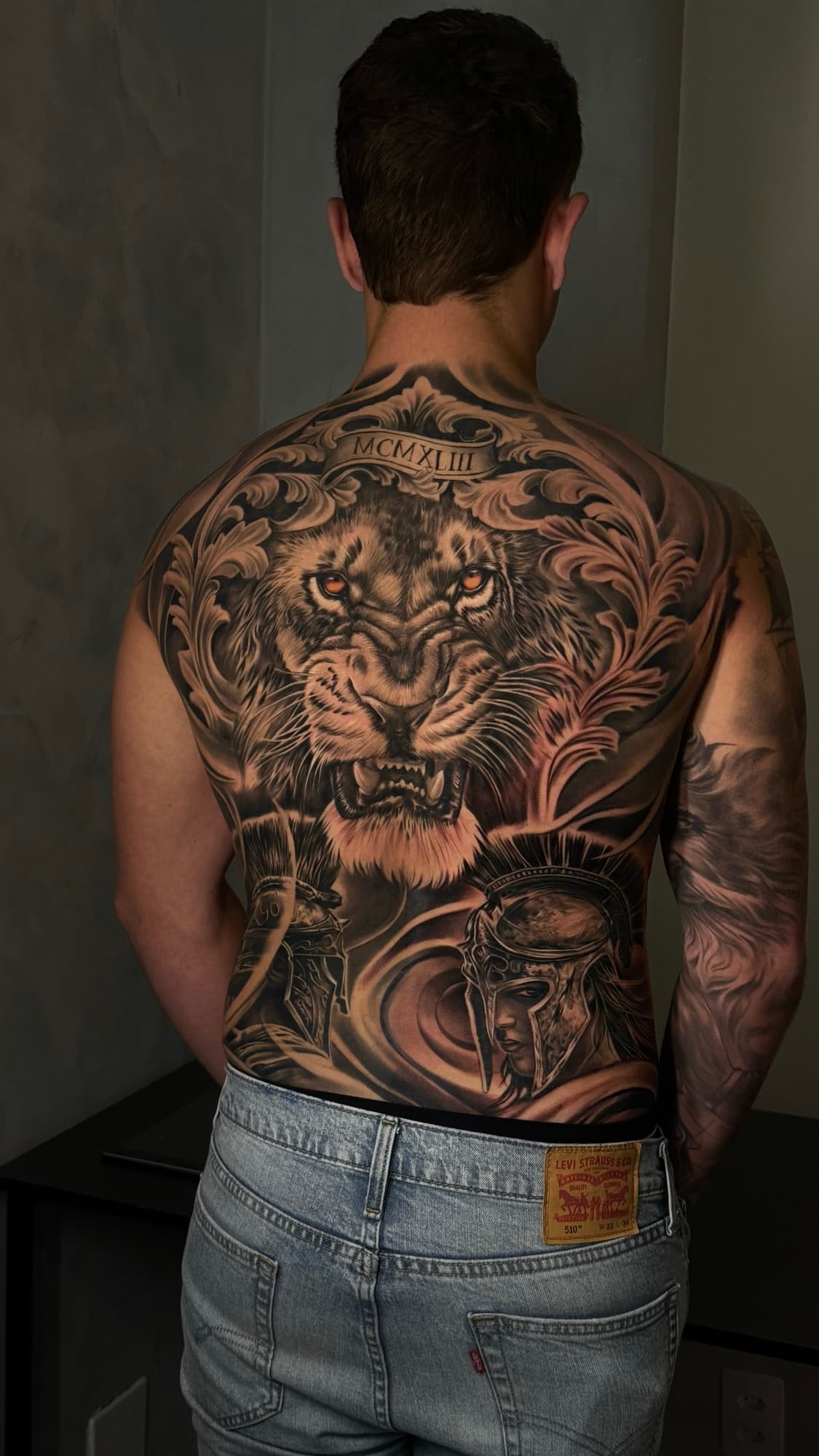
What is a realism tattoo
A realism tattoo is built with shading, not outlines. Instead of heavy lines defining the design, tonal transitions, from the deepest black to the natural tone of the skin, create volume and make the image look like a photograph.
That's why realism demands technical mastery: smooth gradients, well-calibrated contrast and attention to details like pores, hair, reflections in the eyes and the texture of metal or fabric.
Black and grey realism
At Row, realism is mostly done in black and grey: black ink at different dilutions creates the full tonal range. It's the most classic form of the style and the one that gives the most strength to portraits, animals and religious themes.
Some projects get a touch of color for emphasis, like a big cat's eyes or a red detail. That's decided with the artist while the design is created.
Most requested themes
Portraits and memorials: the faces of loved ones, including those who have passed. They require a good-quality reference photo and an artist sensitive enough to capture the expression, not just the features.
Animals: lions, tigers, jaguars, wolves. The challenge is the texture of the fur and the life in the eyes.
Religious and mythological: Jesus, angels, Templar knights, Greek gods and warriors, which often become large projects such as full sleeves and back pieces.
Best placements for realism
Realism needs room for the details to breathe. Arm, forearm, thigh, calf, chest and back are the most common placements, because they offer enough area and a surface that keeps the image readable.
Very small pieces limit the level of detail. The artist will tell you the minimum size for the tattoo to stay sharp over the years.
How your project works at Row
It all starts with a quote request: tell us your idea and placement and send references. For portraits, send the photo with the best resolution and lighting you have, because the quality of the reference makes a difference.
The artist reviews it, adapts the composition to your body and shares the price and estimated number of sessions. Larger projects are split into sessions to protect the skin and the precision of the work.