What is a tattoo cover-up
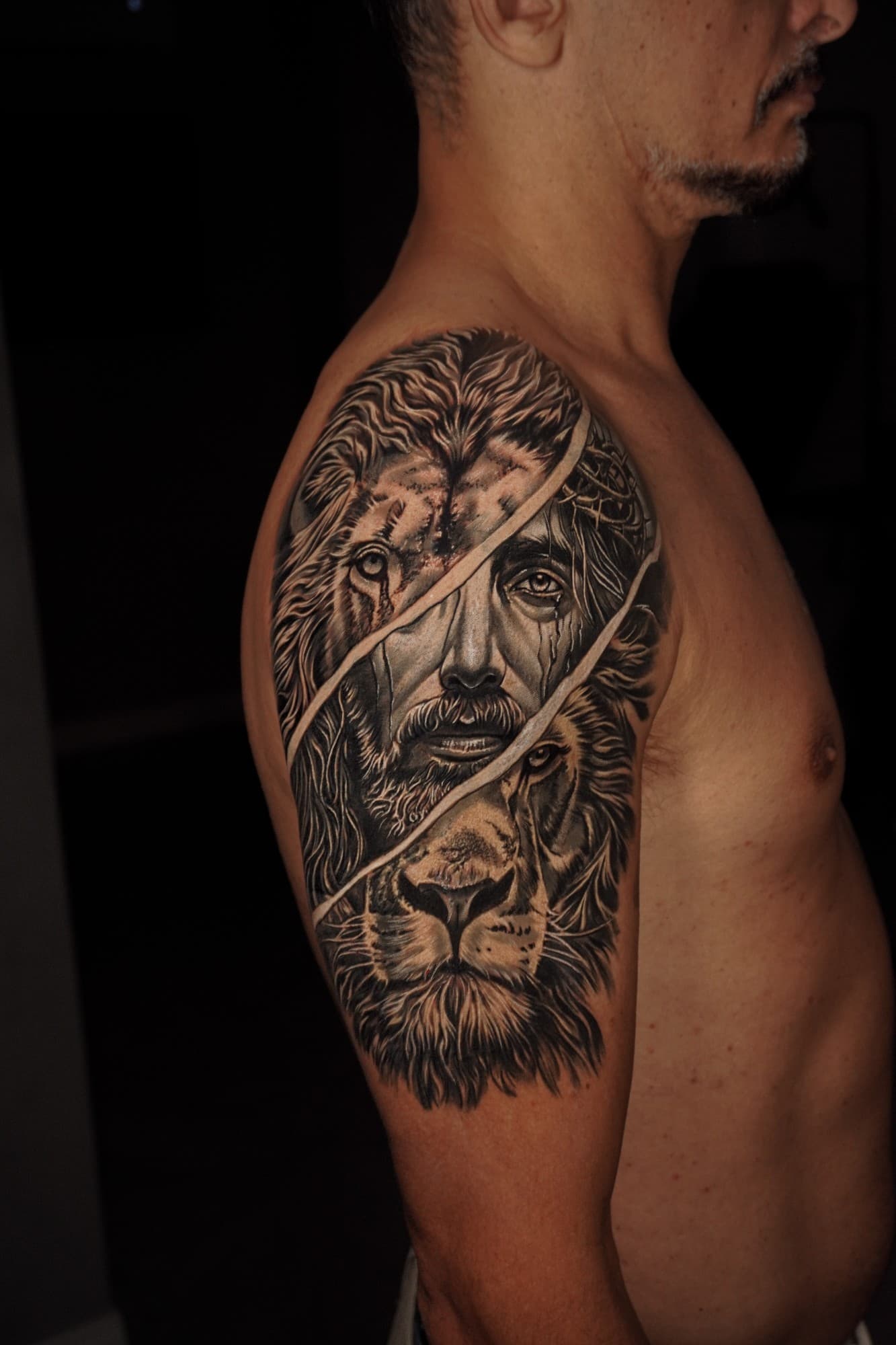
In a cover-up, the artist creates a new composition designed to absorb the existing tattoo. The darkest areas of the new design are placed over the old tattoo, and textures, shading and elements of the composition help disguise what's underneath.
Done right, no one can tell there was ever another tattoo there.
Cover-up or rework?
Not every old tattoo needs to be covered. When you still like the design but it's faded, blurred or lacks contrast, a rework may be the best option: the artist retouches the existing tattoo, bringing back sharpness, depth and brightness.
When you want a completely different design, the answer is a cover-up. This decision is made with the artist, based on photos of your current tattoo.
What makes a good cover-up
The size, color and density of the old tattoo are the main factors. In general, the new design needs to be somewhat larger and have enough dark areas to cover the old one, and very dark or heavy tattoos limit the options.
In some cases, the artist may recommend laser lightening sessions before the cover-up to open up more design possibilities. That's only recommended after an assessment.
How to request your cover-up assessment
With your quote request, send clear, well-lit photos of your current tattoo, straight on and from a little distance, and tell us what you'd like instead. Mark on the form that there's already a tattoo in the area.
The artist then assesses feasibility, suggests a composition and shares the price and estimated number of sessions.